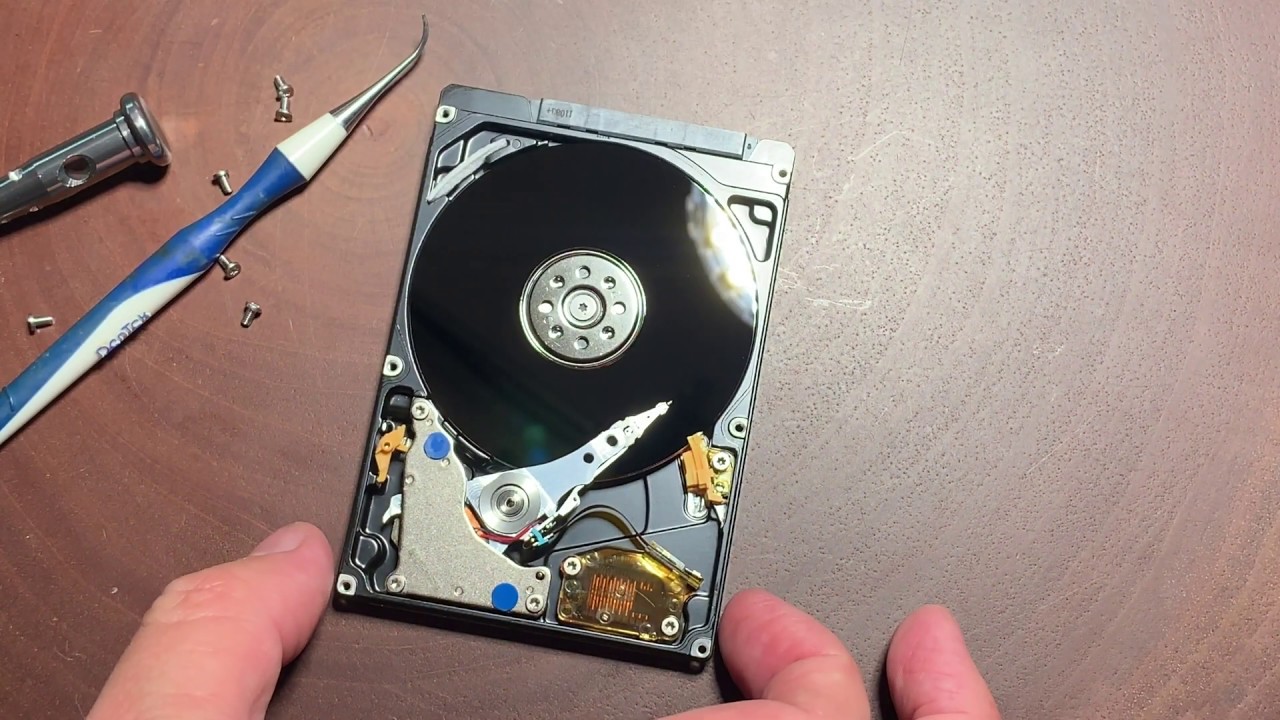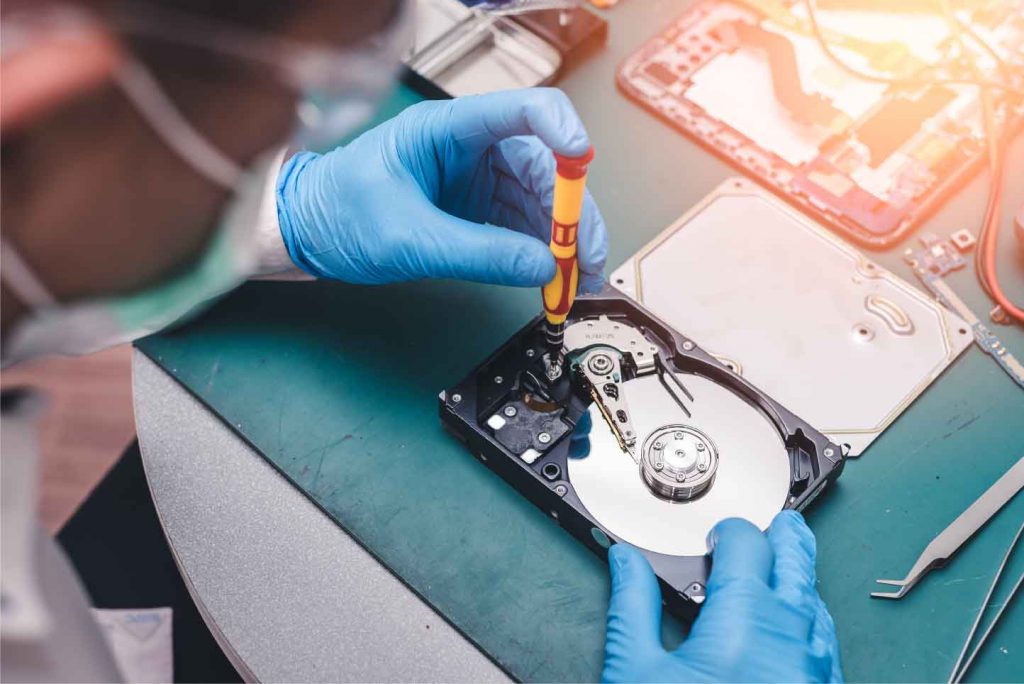
Hard drive data recovery refers to the process of restoring data from a hard drive that has experienced failure, corruption, or damage. This can involve various situations, such as mechanical breakdowns, virus attacks, unintentional data loss, or accidental damage. Hard drives are integral to most modern devices, including desktop PCs, laptops, and gaming consoles, making data recovery a crucial service for both personal and professional use.
In more complex cases, especially involving legal investigations or cybersecurity incidents, computer forensics services may also be employed to recover, analyze, and preserve data from hard drives without compromising its integrity.
Hard Drive Internal Components
A hard drive is composed of several essential components that work together to read and write data:
- Power Supply: The device’s power supply can be used to power the hard drive installed in a computer.
- Jumper Connector: A jumper is inserted into the drive’s data recovery connector to configure alternative drive modes.
- Wiring: Hard drives use a minimum of four wires in a single cable to connect with devices, enabling communication between the hard drive and the motherboard.
The interface that connects a hard drive to a computer, laptop, or gaming system is critical to ensuring data transfer between the two. These components work together to provide high transmission speeds and large storage capacities, making hard drives an excellent choice for mass data storage.
Types of Hard Drives and Their Storage Capacities
- Desktop PCs: Typically use 3.5-inch hard drives.
- Laptops: Generally equipped with 2.5-inch hard drives.
- Storage Capacity: Current hard drives can store up to 8TB of data, offering large storage capacities for users.
Although modern technology is shifting toward solid-state drives (SSDs), hard drives remain essential for many industries, including automotive sectors and consumer electronics.

Hard Drive Data Recovery Process
Hard drive failures can be caused by several factors, including unintentional data loss, mechanical breakdowns, virus attacks, or partition damage. In these cases, data recovery specialists can often retrieve data from damaged or corrupted drives, with many success stories across various disk types, including hard drives.
- Unintentional Data Loss: This may happen due to accidental deletion or formatting.
- Virus Attacks: Malware or ransomware can compromise data, leading to loss.
- Mechanical Failures: Common hard drive issues like motor failure, damaged read/write heads, or corrupted platters.
When legal disputes, security breaches, or sensitive information are involved, computer forensics services play a critical role in not only recovering the lost data but also maintaining a verifiable chain of custody for use in court or internal investigations.
Data recovery specialists use advanced tools and techniques to recover lost or corrupted files from these drives.
Advantages of Hard Drive Data Recovery
- High Transfer Rates: Hard drives offer impressive transfer rates, reaching up to 150MB/s, which helps facilitate fast data recovery.
- Native Command Queuing (NCQ): NCQ optimizes the sequence in which read and write commands are processed, enhancing the efficiency of data retrieval.
- Plug-and-Play: Hard drives can be easily plugged into devices and used immediately, much like USB drives, providing flexibility for recovery operations.
Conclusion
Hard drives continue to be a reliable storage medium despite the rise of solid-state drives (SSDs). They are ideal for personal data storage, backups, and less-demanding applications. However, in high-performance environments where speed is crucial, they may not be the best option.
For those facing data loss, hard drive data recovery services offer a valuable solution, enabling the retrieval of important files and restoring valuable data from malfunctioning drives. Whether due to accidental deletion, mechanical issues, or malicious attacks, professionals can often recover data from damaged drives, ensuring that valuable information is not lost forever. In cases where digital evidence or security breaches are involved, partnering with computer forensics services can provide an additional layer of expertise and assurance during the recovery process.